



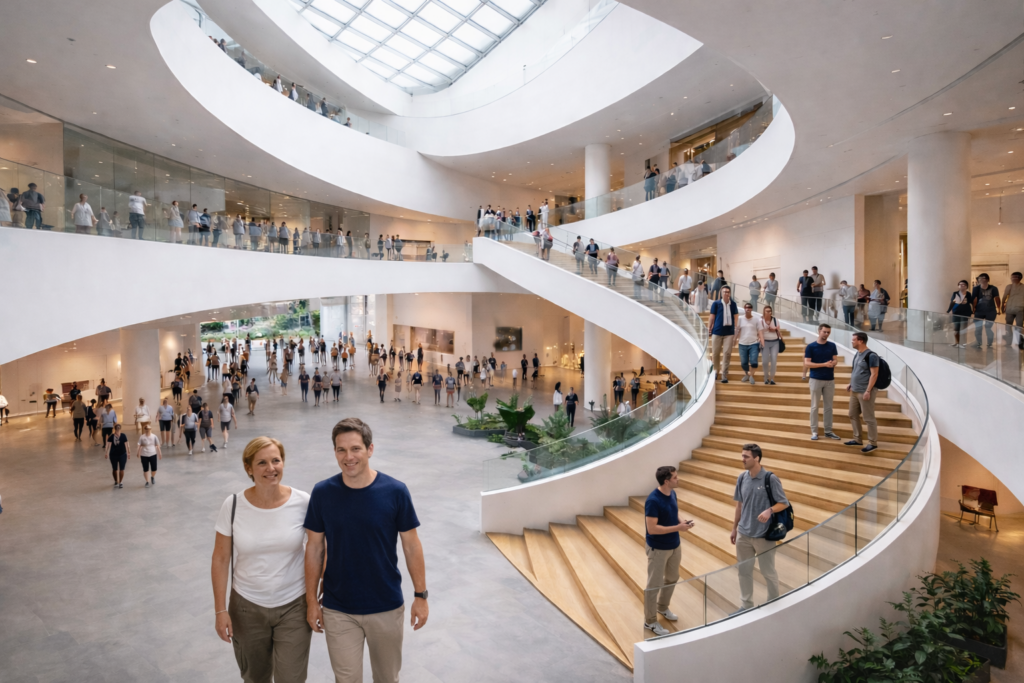
As we look ahead in 2026, some of the world’s most ambitious architecture projects are preparing to open their doors. From striking cultural institutions to next-generation arenas, these spaces aren’t just visually bold, they’re designed with intention around how people move, gather and experience them.
A recent roundup from Galerie Magazine highlights a clear trend across these upcoming projects: architecture is no longer just about form. It’s about flow.
And that shift has big implications for venues, attractions, museums, and live entertainment destinations everywhere.
Architecture Is Catching Up to Experience Design
The most exciting projects slated to open in 2026 share a common philosophy: the visitor journey matters as much as the structure itself.
Across new museums, performance venues, and mixed-use cultural hubs, architects are prioritizing:
- Thoughtful circulation and intuitive movement
- Flexible spaces that adapt to different audiences and moments
- Environments that reduce friction and invite exploration
This isn’t accidental. Today’s visitors expect experiences that feel effortless. They want to move through a space naturally, spend more time engaging with what matters, and less time navigating bottlenecks, lines, or confusion.
In other words, buildings are being designed the way great experiences are built: with intention.
Flow Isn’t Just Physical. It’s Operational.
While architecture can guide movement, operations determine whether that flow actually works in practice.
Even the most beautifully designed venue can feel overwhelming with flooded entry points, queues spill into walkways, or capacity isn’t managed dynamically. That’s where technology becomes an essential extension of the architecture itself.
Modern experience platforms help venues:
- Balance capacity across time and space
- Anticipate peak demand and adjust in real time
- Support flexible programming without adding operational complexity
When technology and architecture work together, the result is a space that feels calm, connected, and welcoming, even at peak moments.
Designing for Flexibility Means Designing for Change
One standout trend in 2026 architecture is adaptability. Many of the projects highlighted by Galerie are designed to host multiple types of experiences within the same footprint. A gallery becomes an event space. An arena transforms for different audiences. A cultural campus evolves throughout the day.
This flexibility mirrors how successful venues operate today. Experiences are no longer static. Programming changes, audiences shift, and demand fluctuates.
Technology that supports this kind of flexibility allows venues to:
- Scale operations without rebuilding systems
- Introduce new experiences faster
- Maintain consistency even as offerings evolve
Architecture sets the stage, but it’s the digital layer that keeps everything running smoothly behind the scenes.
The Future of Design Is Connected
What 2026’s most anticipated architecture projects make clear is this: the future of experience design is deeply connected.
Connected spaces.
Connected journeys.
Connected moments.
At accesso, we see this every day across attractions, museums, ski resorts, and live entertainment venues. The most successful experiences are the ones where every moment feels intentional, from before guests arrive too long after they depart.
As architecture continues to evolve toward flow-first design, experience technology plays a critical role in bringing that vision to life. When physical space and digital systems are aligned, venues can operate with confidence, even during their busiest moments.
Looking Ahead to 2026 and Beyond
The architecture opening in 2026 gives us a glimpse into where the industry is heading. Spaces designed not just to impress, but to perform. To adapt. To move people through moments that feel cohesive and human.
The venues that will stand out aren’t just the ones with bold designs. They’re the ones that pair those designs with the right operational foundation, ensuring that every experience unfolds just the way it was meant to be.
Ready to bring flow-first design to life?
Great architecture creates possibility, but great experience design makes it feel effortless.
Request a demo to see how accesso helps venues manage flow, optimize operations, and power unforgettable moments.